


Advanced Driver Assistance Systems (ADAS) and Autonomous Driving (AD) features are now standard talking points in the automotive world, but the real work happens behind the scenes. The difference between a smooth lane change and a nervous driver takeover is often not the algorithm itself, but the quality of the data logged during development and validation.
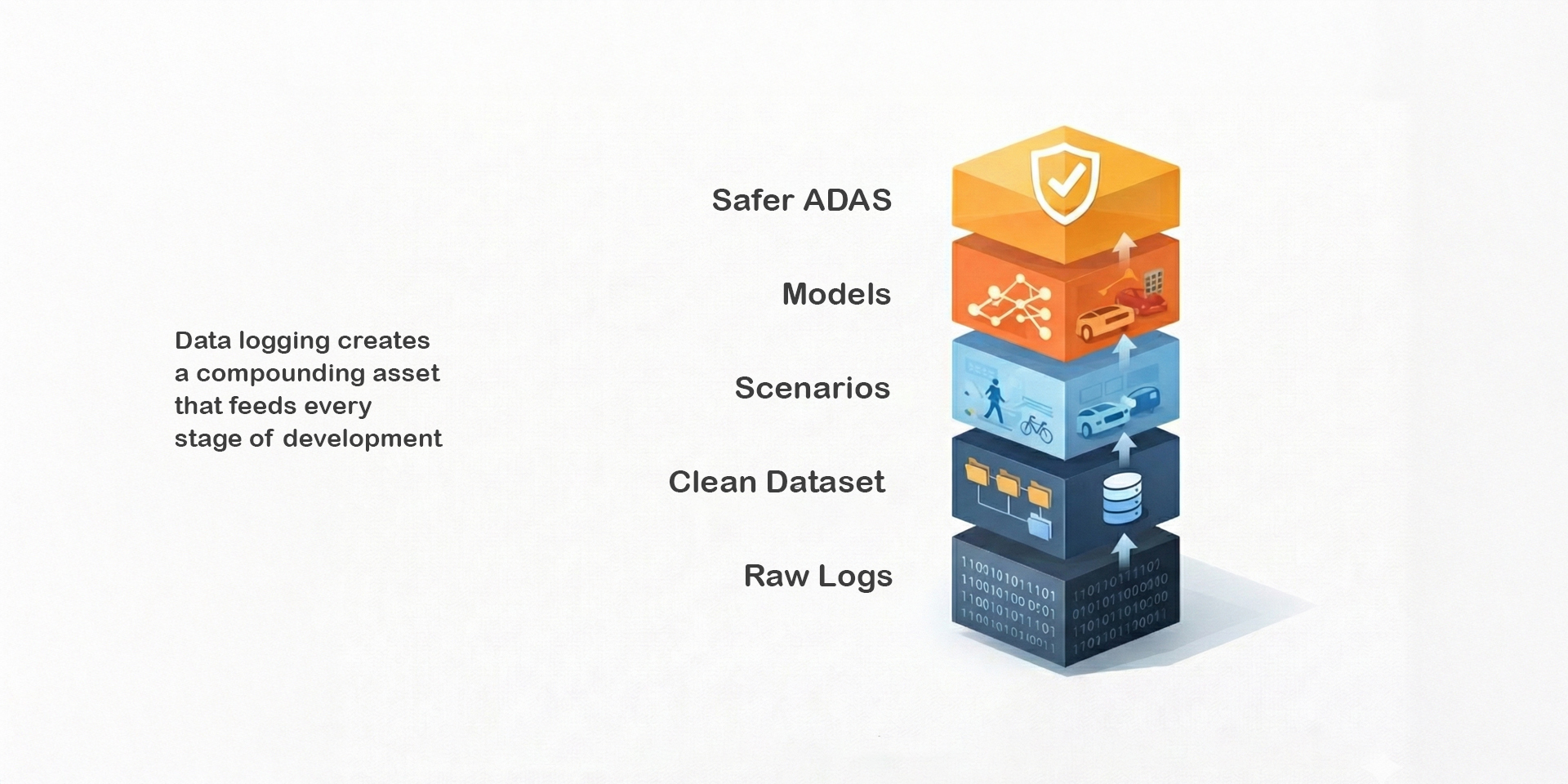
Without robust sensor data logging, every test drive is a one‑off experiment. With it, each kilometer becomes a reusable asset for training, validating, and improving ADAS and AD functions.
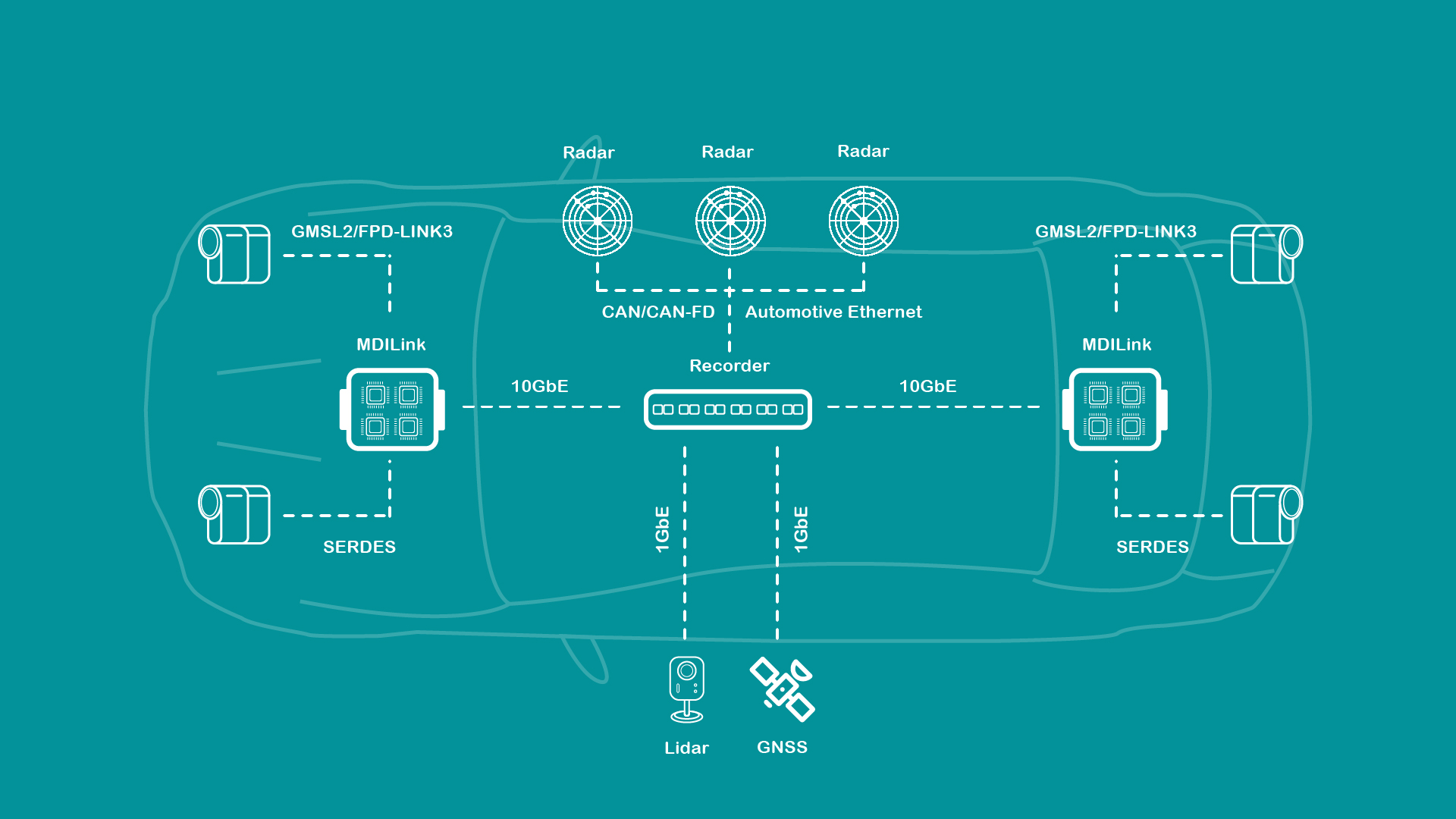
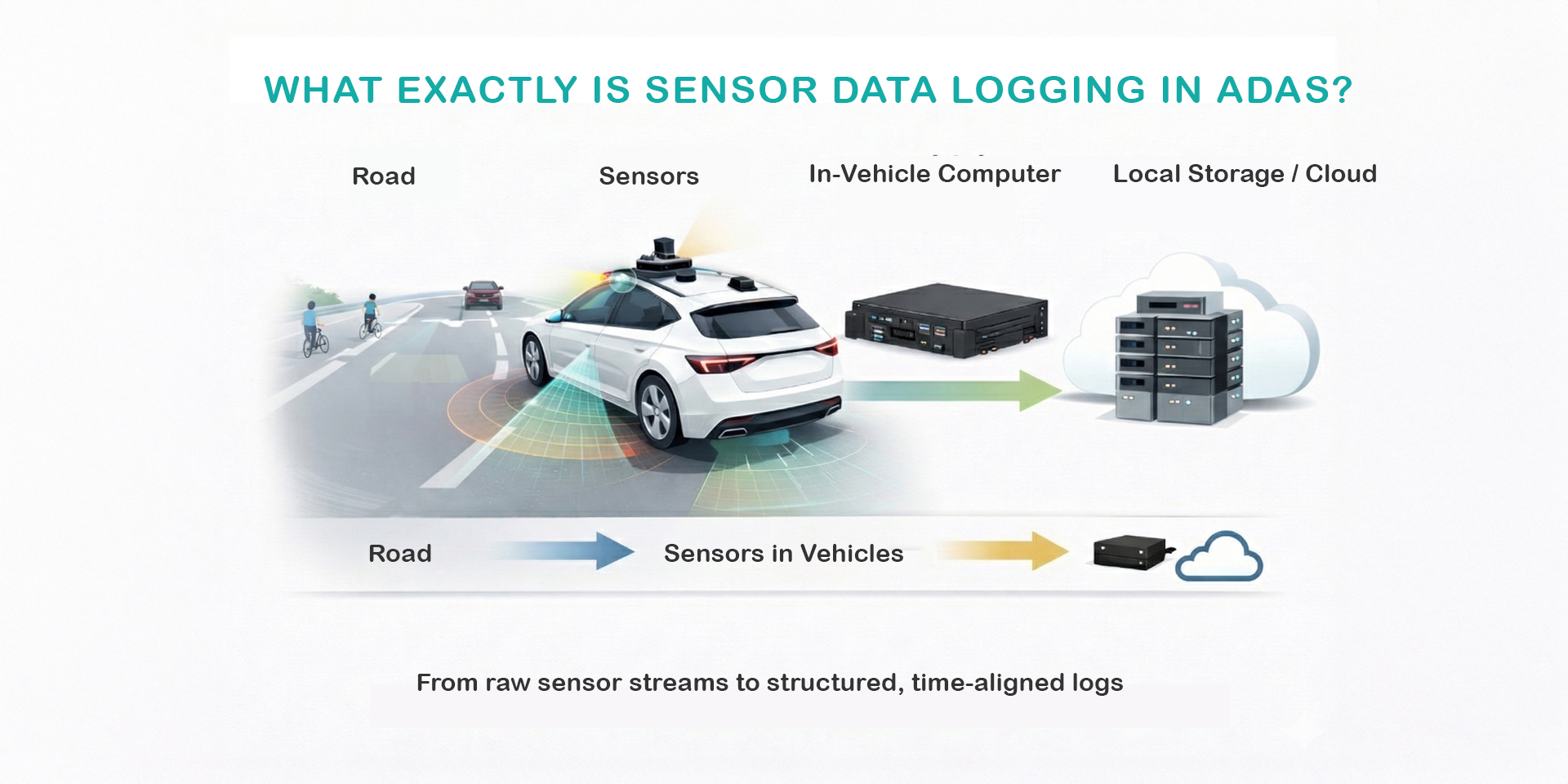
Sensor data logging is the process of continuously recording what the vehicle “sees,” “feels,” and “decides” while driving in real traffic. This typically includes:
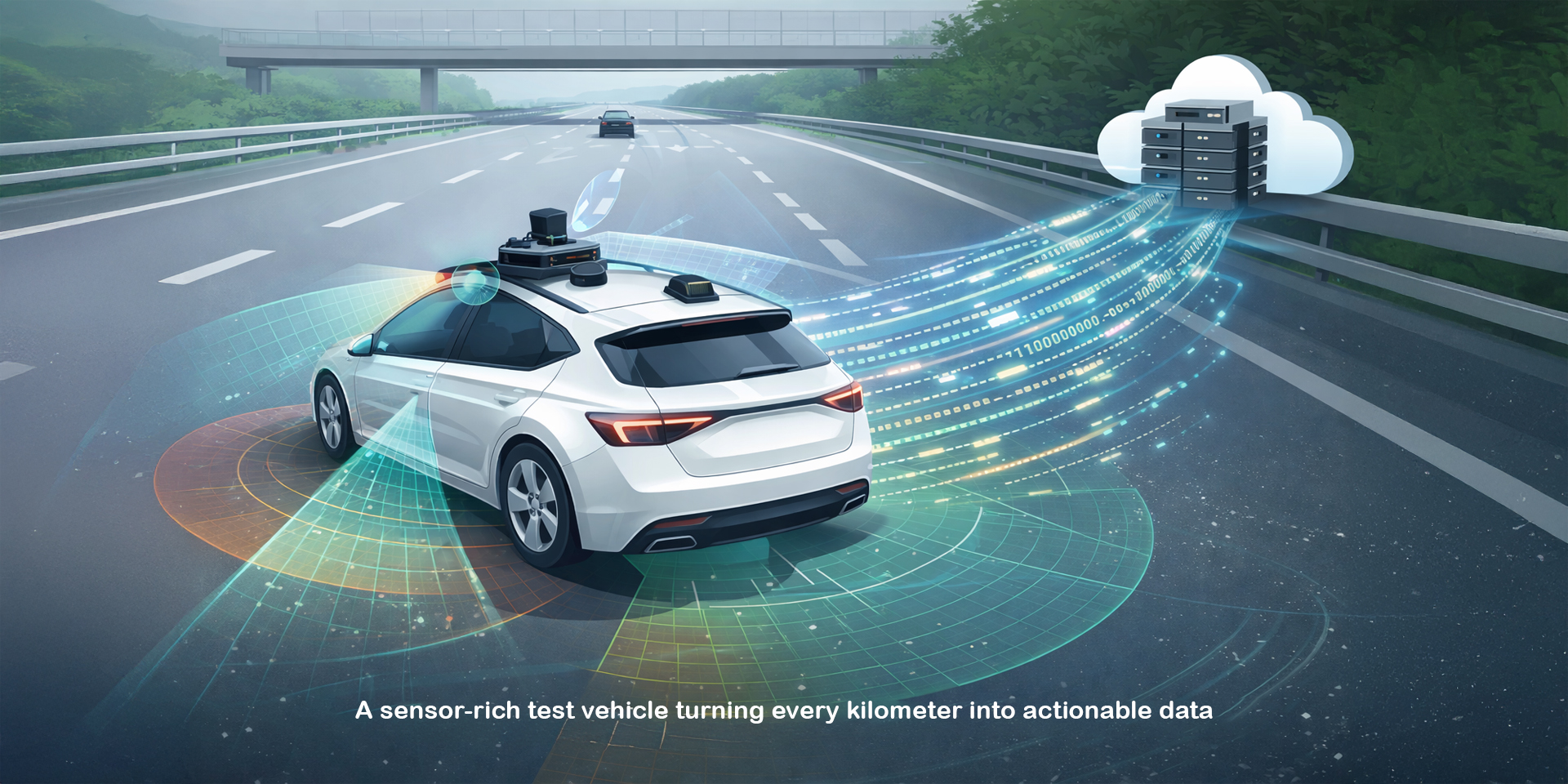
All of this data is time‑synchronized and stored either locally in the vehicle or streamed to the cloud for later analysis, simulation, and machine learning.
Most organizations focus conversations on better AI models, more compute, and new sensors. But in practice, models are only as good as the data used to train and validate them. Well‑designed logging brings several advantages:
Real‑world logs capture rare but critical events, aggressive cut‑ins, pedestrians emerging from occlusions, and complex junctions that are hard to script in synthetic scenarios. These edge cases are what truly stress perception and planning.
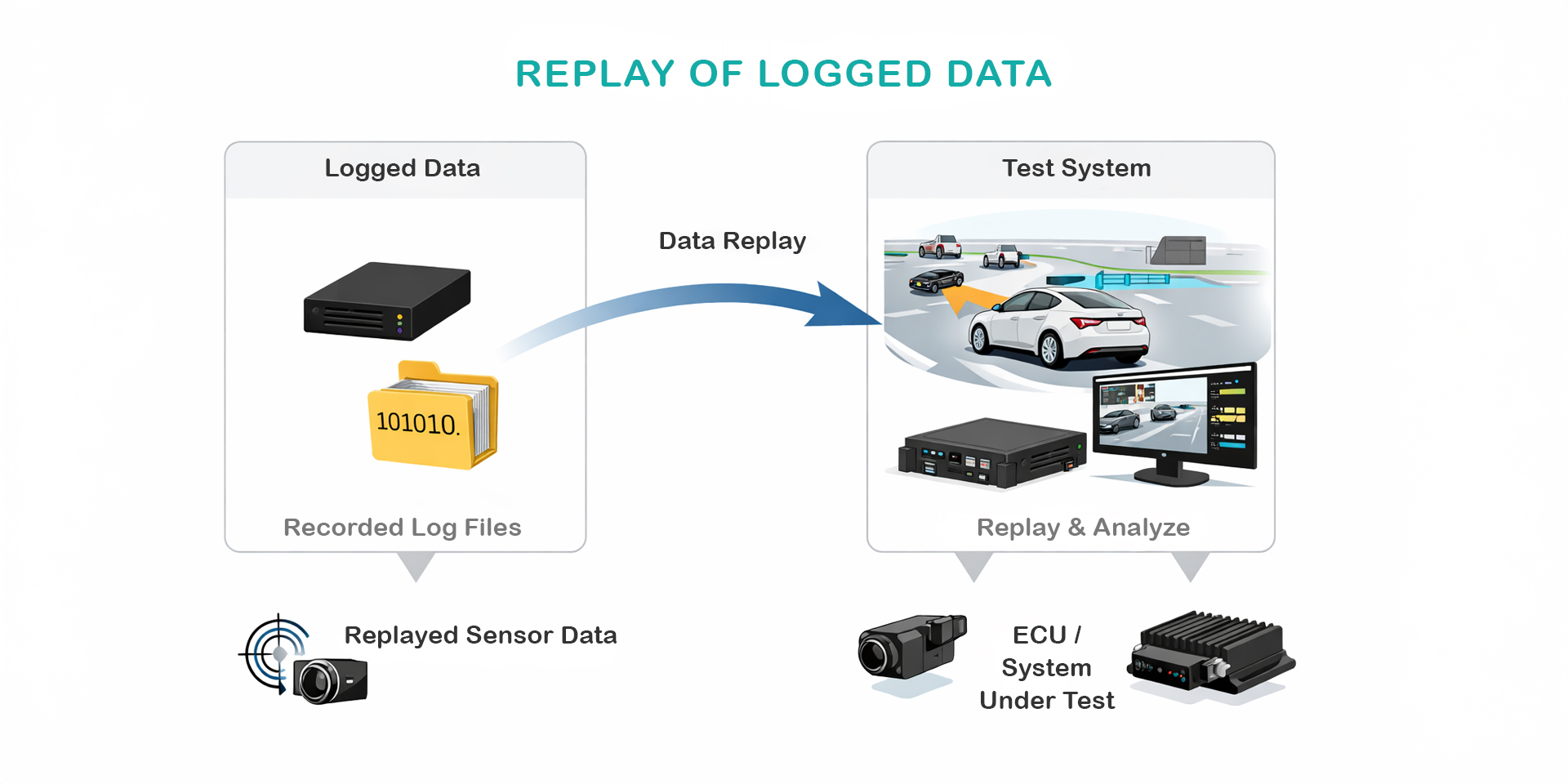
When something goes wrong, synchronized sensor and vehicle logs let engineers replay exactly what the system saw, decided, and did, frame by frame.
Hardware and models will change, but a clean, well‑indexed log database can be reused for future models, new features, and regression tests for years to come.
Traditional validation is mileage‑driven: “We drove X million kilometers.” The problem: Those kilometers are hard to reproduce later when a bug appears. With robust logging, the mindset shifts from focusing on mileage to using scenario libraries.
A single recorded drive can be replayed in simulation against multiple model versions and parameter sets, all under identical conditions.
Instead of just counting distance, teams index logs by scenario: “night‑time pedestrian crossing”, “highway cut‑in at 120 km/h”, “sharp curve with poor lane markings.”
New ADAS/AD software is tested against known tricky logs long before it touches public roads, dramatically reducing risk.
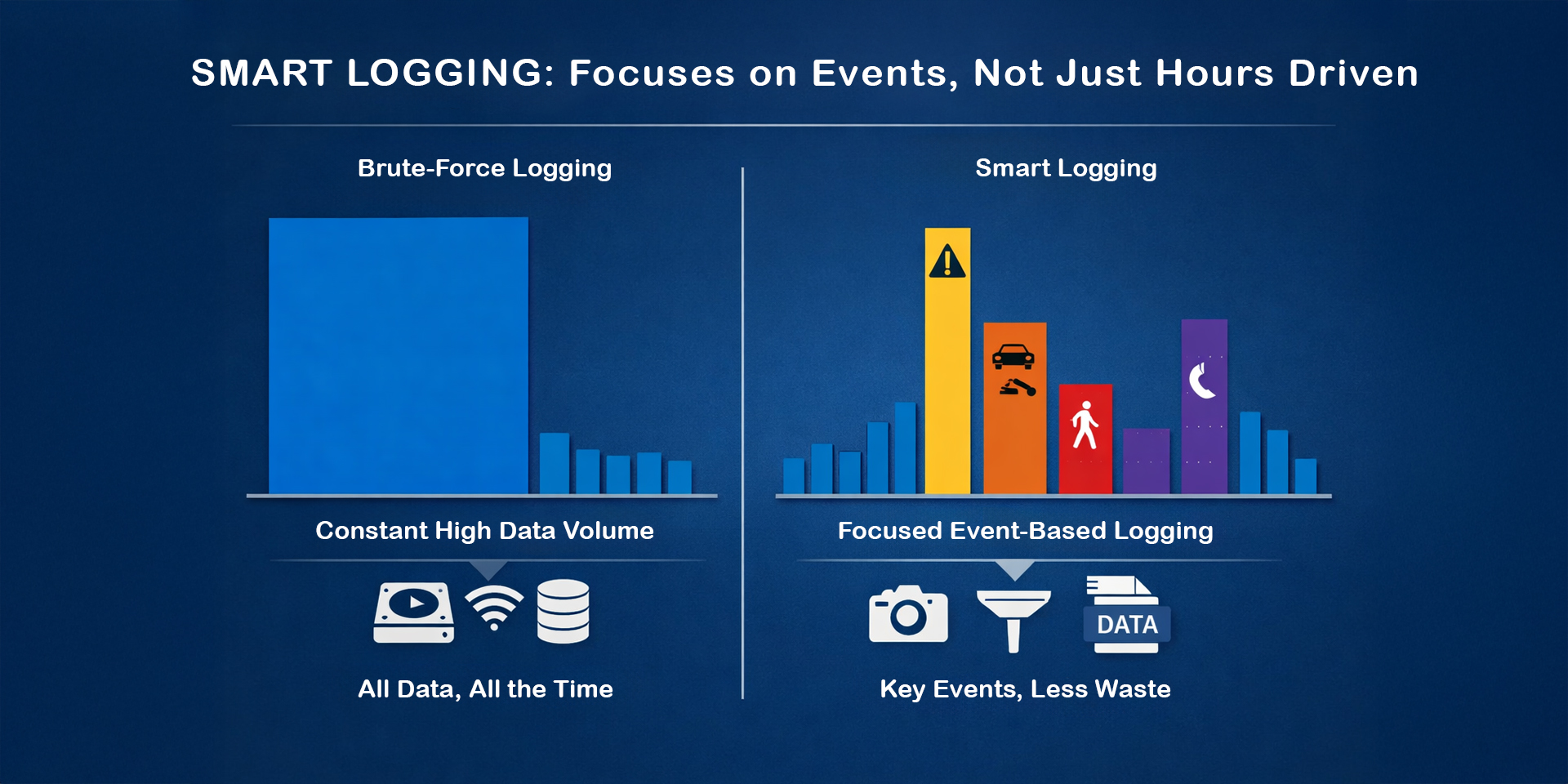
Recording everything, everywhere, at full resolution sounds ideal, but quickly becomes unmanageable in terms of storage, bandwidth, and processing. The key is smart, event‑driven logging:
Log in greater detail around events like AEB triggers, lane departure warnings, strong braking, sudden steering inputs, or object detection anomalies.
Increase log richness in complex conditions (urban traffic, rain/fog, night‑time) while downsampling in simple highway cruising.
Edge filtering discards uninformative periods while keeping high‑value segments at full fidelity.
This approach keeps total data volumes under control while preserving the slices that truly matter for safety and performance.
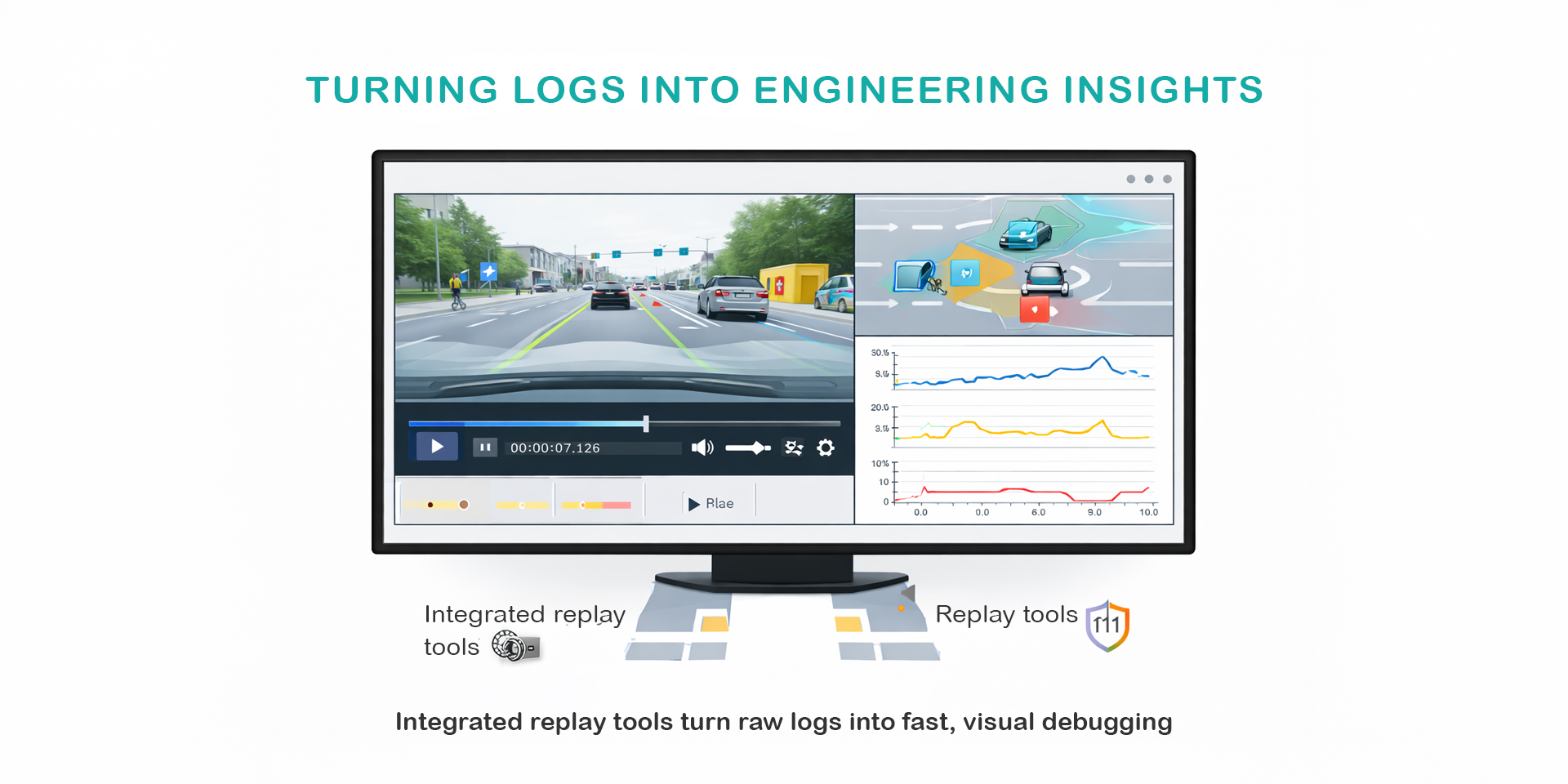
Collecting data is only step one. The real impact comes when teams can quickly transform logs into insights and actions.
Engineers search for patterns like “false lane departure on curved roads” or “near‑miss with vulnerable road users at night, then pull all matching logs for study.
Developers inspect time‑aligned video, sensor overlays, ADAS decisions, and vehicle dynamics, making it easier to pinpoint whether an issue was perception, fusion, planning, or driver interaction.
Findings from log analysis feed directly into algorithm improvements, new test cases, calibration updates, and even HMI changes for better driver understanding.
A mature logging strategy supports more than just core ADAS safety functions:
Long‑term patterns from ECU logs and sensor health can trigger early service before critical failures occur.
Learn which ADAS features drivers actually trust, when they disengage assistance, and which alerts they tend to ignore.
Aggregated, anonymized datasets power offerings like usage‑based insurance, fleet safety scoring, and pay‑per‑use features.

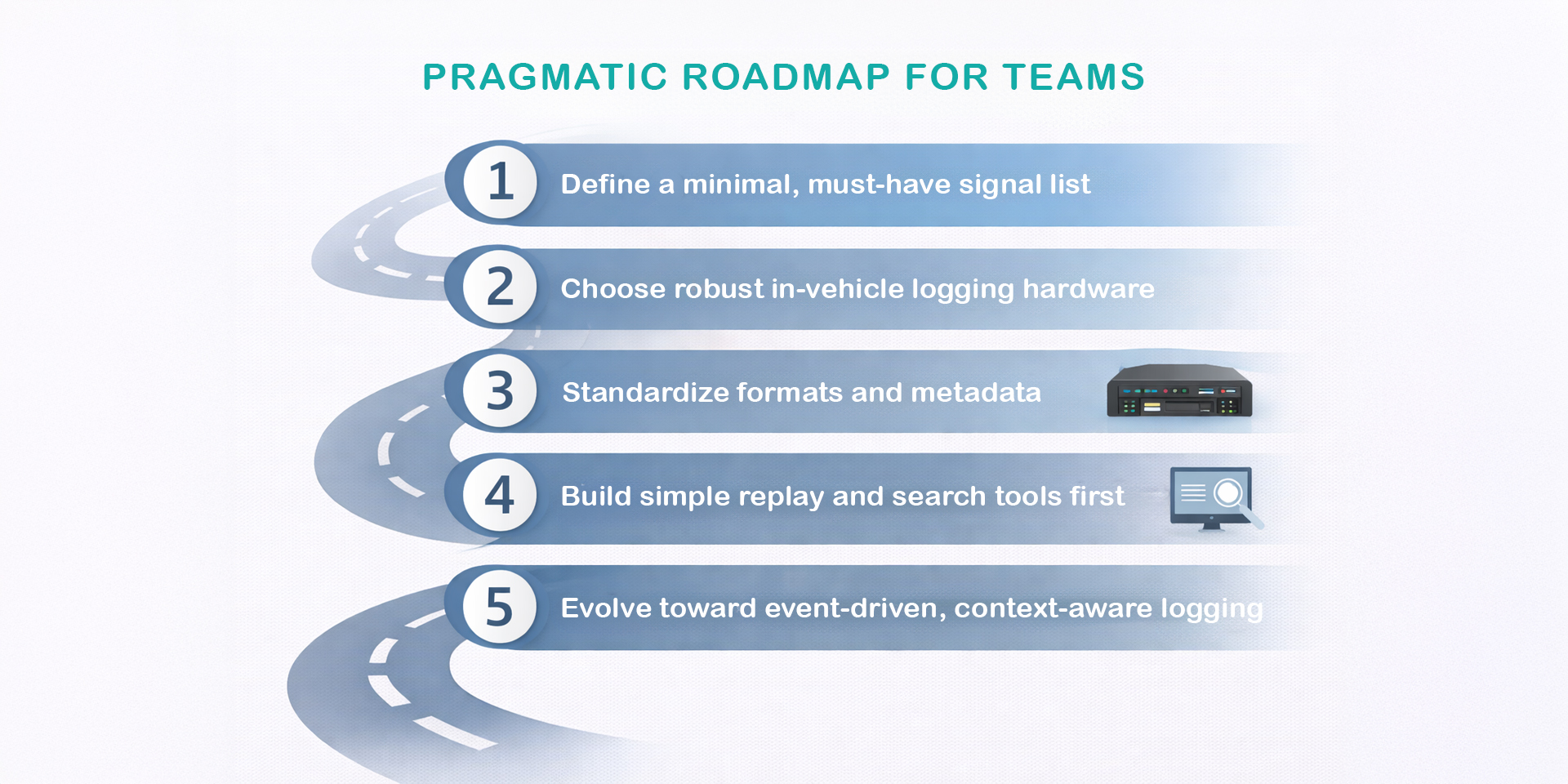
If your ADAS/AD program is still maturing, here’s a pragmatic roadmap:
Include key sensors, vehicle dynamics, timestamps, and ADAS states before adding “nice‑to‑have” channels.
Focus on bandwidth, storage, synchronization, and ruggedness for real roads.
Consistent schemas and calibration data will save a huge effort when you start doing large‑scale analysis and ML.
Even a basic internal tool that lets engineers search logs and replay video, and CAN/vehicle signals, is a huge productivity boost.
As your understanding grows, move from “log everything” to “log what matters most.”
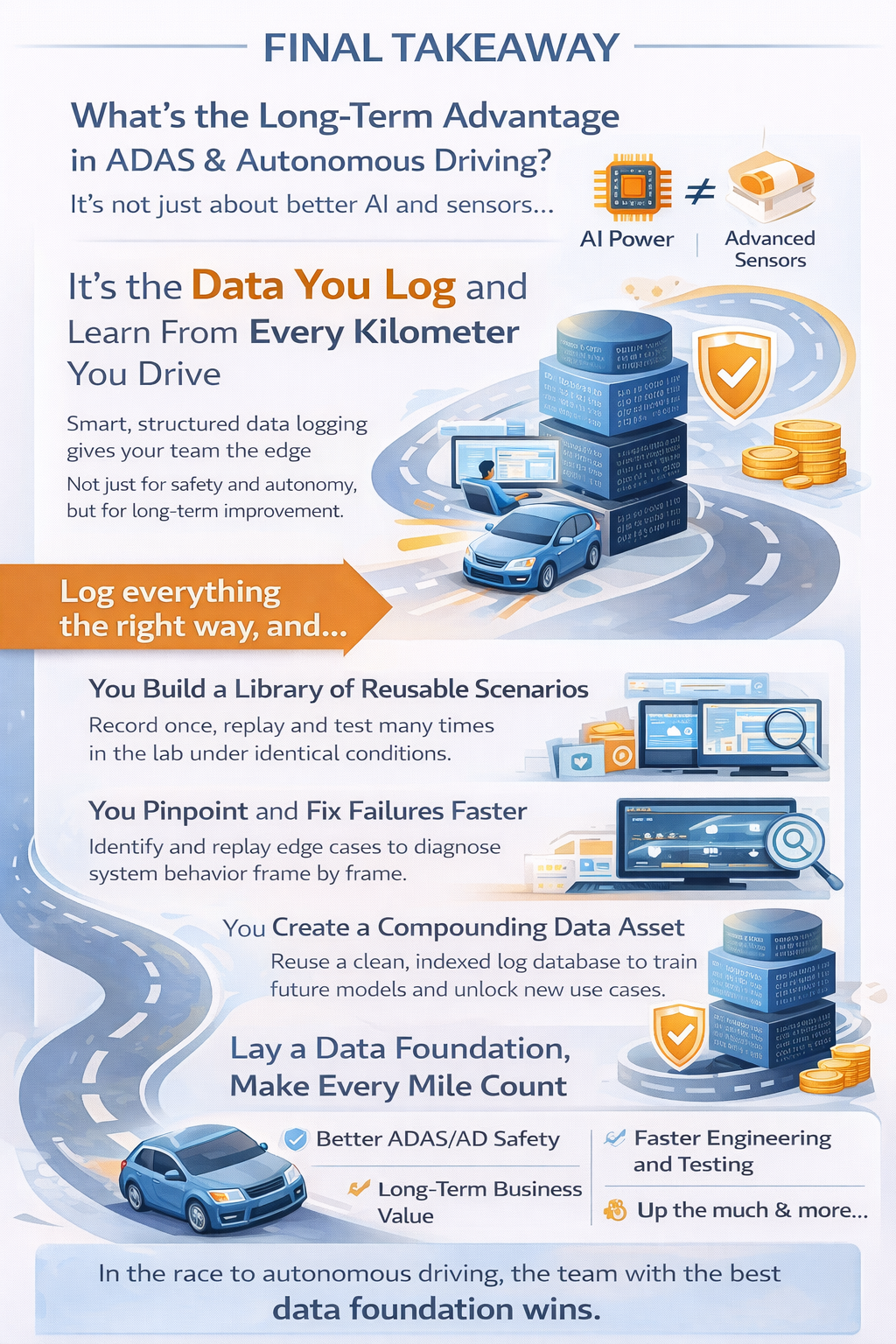
In the race to deliver advanced driver assistance and automated driving, algorithms, GPUs, and sensors are only half the story. Your true long‑term advantage lies in how well you capture, organize, and learn from every kilometer your fleet drives.
Get the data foundation right, and every future model, feature, and business idea becomes easier, faster, and safer to bring to the road.
[1] AD Validation Toolbox - b-plus
https://www.b-plus.com/en/portfolio/ad-validation-toolbox
[2] Cloud-based Data Management - b-plus
https://www.b-plus.com/en/portfolio/cloud-based-data-management
[3] High-Bandwidth In-Vehicle Data Logging for ADAS and AD - NI https://www.ni.com/en/solutions/transportation/adas-and-autonomous-driving-testing/adas-and-autonomous-driving-validation/adas-datalogger.html
[4] ADAS Clearly Explained: Functions, Algorithms, Sensors, and Data https://www.basic.ai/blog-post/advanced-driver-assistance-systems-adas-clearly-explained-functions-sensors-data-algorithms
[5] Infographic: The sensors that drive ADAS safety - Electronics360 https://electronics360.globalspec.com/article/20297/infographic-the-sensors-that-drive-adas-safety
[6] ADAS Sensors Guide: The Different Sensors ADAS Systems Use https://caradas.com/adas-sensors-guide/
[7] ADAS annotation: teaching the road to AI models - Innovatiana https://www.innovatiana.com/en/post/adas-annotation
[8] ADAS Datalogging Automotive Computing Ecosystem - InoNet https://www.inonet.com/automotive-computing-adas-datalogging/?lang=en
[9] Case study - Data acquisition and data logging ADAS https://www.inonet.com/case-study-data-acquisition-and-data-logging-adas/?lang=en
[10] This project has received funding from the https://www.hi-drive.eu/app/uploads/2023/05/Hi-Drive-SP3-D3.2-Logging-tools-recommendations-v1.0.pdf
[11] Beginner's Guide to ADAS: Advanced Driver Assistance (2025) https://www.logic-fruit.com/blogs/automotive/adas-guide/
[12] Visualize, Label, and Fuse Sensor Data for Automated Driving https://www.mathworks.com/company/technical-articles/visualize-label-and-fuse-sensor-data-for-automated-driving.html
Traditional Ethernet required point-to-point connections, adding switches, increasing weight, complexity, and cost. To address power consumption, heat issues, and complexity, we moved to 10BASE-T1S, a simpler, efficient Ethernet technology. 10BASE-T1S changes everything. It brings back the simplicity of a bus topology, letting multiple ECUs share the same wire. Most ECU communication is under 10 Megabits per second, making 10BASE-T1S ideal for control data, just like CAN and FlexRay, but fully Ethernet. Today's cars use many network types, connected by complex gateways, but there's a movement toward a single unified network: Ethernet everywhere.